
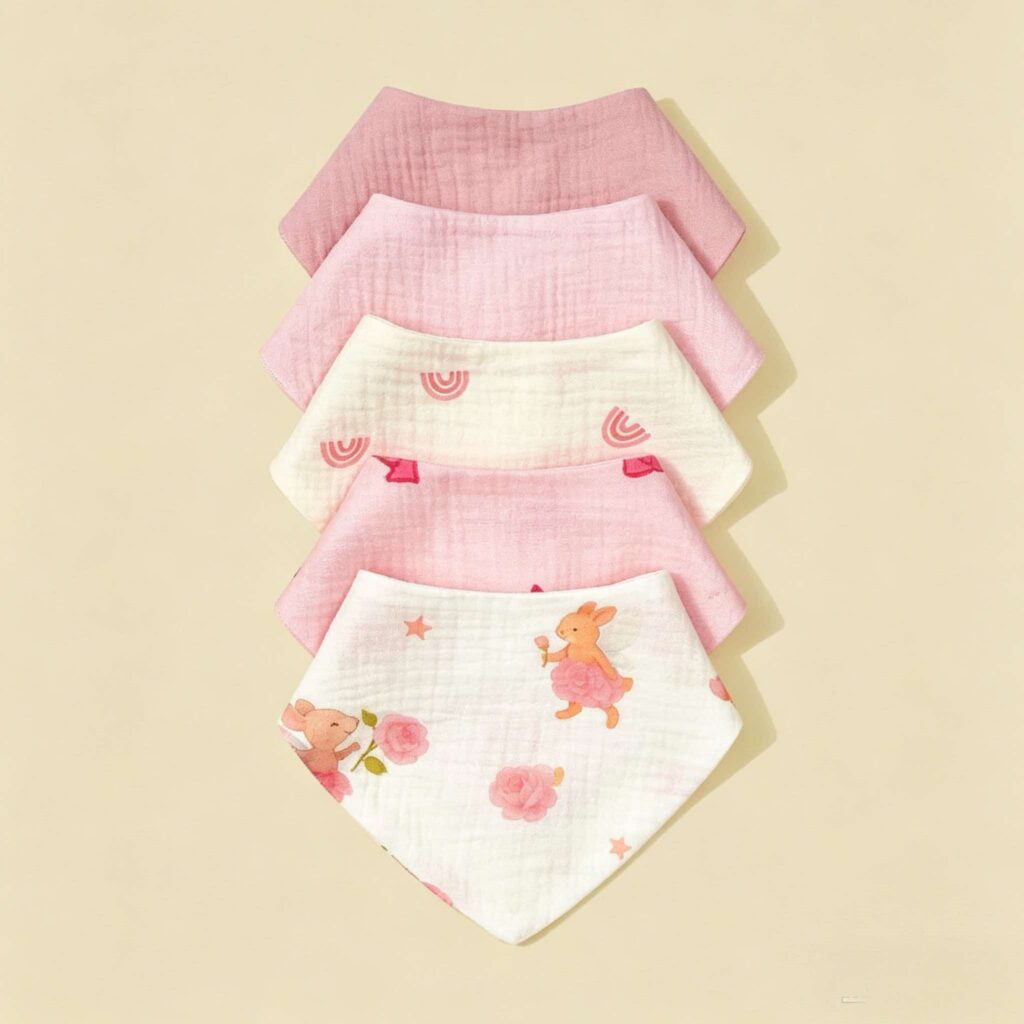
For a triangular bib RFQ, mark the pictured display face, request a separate reverse view and identify the edge and neck-area construction that the supplier is actually offering. Connect all views to one item reference and sample. A photograph of several fronts does not establish the unseen reverse, material composition, fastening arrangement or contents of a commercial assortment.
Confirm the photographed item before discussing construction
The selected official Zimeng Cotton reference image shows triangular bib-shaped articles arranged in pink and white colourways, including printed designs. Send that image with the catalogue reference and ask the supplier to identify the matching current item. If a catalogue description differs from the selected photograph, resolve the item identity before applying any description or specification to the buyer’s request.
Describe the visible shape and appearance as reference information. The image does not independently verify a fabric composition, number of layers or manufacturing method. Keep those questions attached to the supplier’s confirmed item reference. Avoid combining the appearance of this triangular item with measurements or material descriptions belonging to another article simply because the catalogue groups several textile products together.
Label the front that the buyer is selecting
Mark one selected item and identify the face shown in the image as front A for the enquiry. Where several colours or prints are visible, state which reference the buyer wants the supplier to discuss. The supplier can then confirm whether that pictured appearance belongs to the offered version. A range image is not a confirmation that every pictured option can be selected or supplied together.
If the artwork matters to the decision, mark the visible design rather than relying on a general colour word alone. Ask the supplier to identify the corresponding design code or confirm an annotated reference. Keep the agreed visual reference separate from any promise about print placement or colour consistency that has not been discussed for the actual offered item.
Request the reverse as a separate evidence view
Ask for reverse B of the same selected item. A front-view photograph may leave the reverse entirely unseen, so do not assume it repeats the front print, has the same visible texture or uses a particular finish. The supplier’s response should identify the same article and show the opposite face clearly enough for the buyer’s stated review purpose.
Where the buyer needs information about layers or other construction details, request the applicable description alongside the reverse view. A photograph can help explain which face is being discussed without proving a fibre blend or an internal layer count. Record any material description as supplier-provided information until the relevant evidence needed for the purchase has been supplied and checked.
Give the edge and neck area their own reference
Mark the edge area and the neck-area ends in the enquiry image, then ask the supplier to show the offered construction there. A range photograph may not reveal the edge treatment or any fastening details. The request should identify what needs clarification rather than presume a specific closure, attachment material or adjustment arrangement based on a familiar-looking product.
If the buyer wants to compare two proposed constructions, give each option its own reference. Ask which sample or drawing represents each quotation line. This is a product-identification and purchasing record, not guidance for wearing or modifying the article. No infant fit, age suitability, safety result or fastening performance is established merely by a construction photograph.
Use a view-based supplier comparison table
Keep unavailable views marked outstanding. A supplier comparison sheet is more useful when it shows a genuine gap than when it fills the gap using a picture of a different article. If an offered option changes, ask which view references are replaced and which remain applicable, so purchasing staff can compare the same construction scope across quotations.
Reference | Buyer question | Supplier response to retain
Item identity | Which offered article matches the selected photograph? | Confirmed item reference and catalogue explanation
Front A | Which colour or printed face is being discussed? | Marked offered-image or design reference
Reverse B | What is actually supplied on the opposite face? | Separate same-item reverse view
Edge C | Which edge construction is offered? | Close reference and applicable description
Neck area D | What construction or fastening, if any, is included? | Supplier’s identified offered arrangement
Open evidence | Which requested fields remain unconfirmed? | Separate material or applicable product-information response
• Identify one item across front, reverse and detail views.
• Do not infer hidden construction from the visible face.
• Keep appearance acceptance separate from unverified product claims.
Approve the sample within its recorded scope
When a sample is supplied, connect it to the confirmed item and quotation option. State whether the buyer is reviewing its appearance, the identified construction details or another expressly defined requirement. A limited acceptance should name the accepted features and retain unanswered questions. It should not be read as proof of absorbency, skin suitability, durability or compliance with an unexamined requirement.
Send the view request through Zimeng Cotton’s contact page with the selected image and catalogue reference. Ask the supplier to reconcile the item description and confirm the offered version before order approval. Keep order quantities, pack arrangements, pricing and timing as separate quotation questions. The result should be a clear description of the selected item and its reviewed faces, with unsupported material and infant-performance statements left unclaimed.
Frequently asked questions
Does a photograph of several triangular bib fronts establish the reverse?
No. Request the opposite face of the same offered item and connect the view to a confirmed item or sample reference. Do not assume the unseen face duplicates the visible one.
Can a visible fabric texture verify composition or layer count?
No. Use the photograph to identify the surface under discussion, then request the supplier’s applicable construction and material information. Appearance alone does not establish those properties.
Does accepting the construction image approve infant fit or safety?
No. A visual or construction acceptance covers only its expressly recorded features. Any other applicable product requirement needs a separate item-specific basis and evidence.
Product and contact references
Catalogue reference: confirm matching item: https://zimengcotton.com/product/washcloths/
Related catalogue reference: https://zimengcotton.com/
Contact Zimeng Cotton: https://zimengcotton.com/contact/
Zimeng Cotton blog: https://zimengcotton.com/blog/