
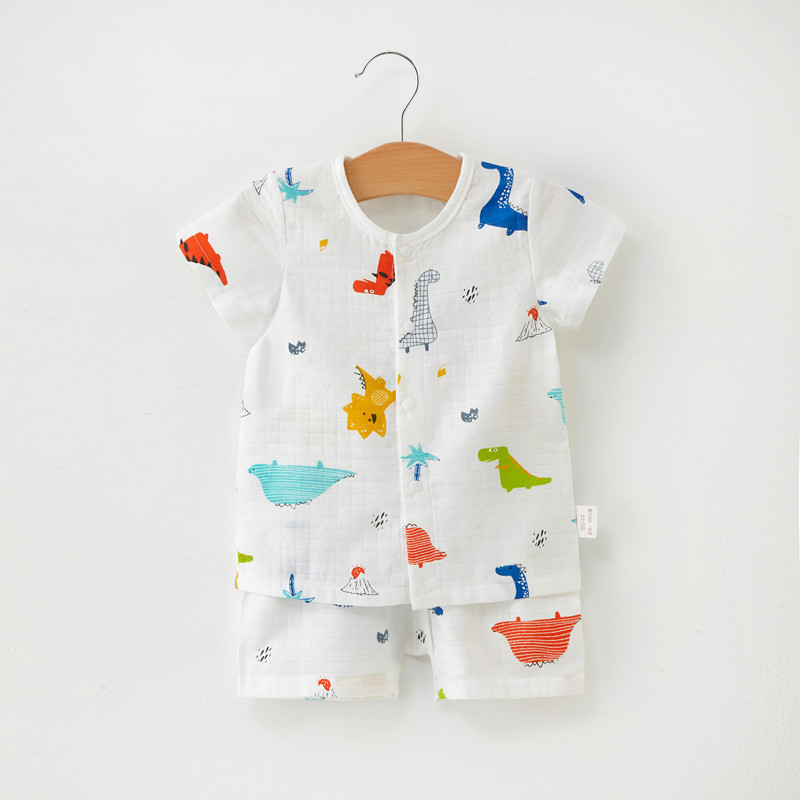
For a printed babywear set RFQ, identify the top and shorts separately and assign an artwork reference to each component. Ask the supplier to confirm that the two references form the exact offered pairing. A photograph showing garments together can identify the appearance being discussed, but it does not by itself confirm a selling unit, every available variation or a shared material specification.
Start with the garments visible in the reference
The selected official Zimeng Cotton catalogue image shows a printed short-sleeve top and shorts together on a hanger. Use the image to identify the appearance of interest, then ask the supplier for the matching current item reference. Keep this confirmation attached to the photograph. A catalogue link, category label and selected picture should describe the same offered item before the buyer treats the reference as an order specification.
Describe the visible pieces in plain terms rather than assigning unconfirmed construction details. For this enquiry, top and shorts give the supplier two distinct components to identify. The photograph does not establish fibre composition, a size system or performance. If those fields matter to the purchase, request the applicable supplier information separately instead of deriving them from fabric appearance or another catalogue entry.
Give each garment its own artwork reference
A single description such as the dinosaur print may be too broad when a buyer is comparing several illustrated designs. Mark the selected top as one reference and the selected shorts as another, and ask the supplier to confirm its corresponding design identifiers. If the supplier has no separate artwork codes, an annotated reference image can identify the two components while the quotation is being clarified.
State whether the request concerns the same motif family, a particular colour arrangement or a specific proposed pairing. These are different instructions. The buyer may accept related motifs on both garments without requiring them to appear at identical positions. Conversely, a particular presentation brief may require named visible features on each component. The buyer should describe the actual requirement rather than assuming that matching has one universal meaning.
Separate motif selection from exact placement
A catalogue photograph can show where a motif happens to appear on the pictured garments. Ask the supplier what it can confirm about the offered version before treating that position as a production requirement. Do not infer that every garment, size or repeat will carry the same visible motif at the same location. A requested position remains a request until the supplier explains its offered arrangement.
If exact placement affects the buyer’s decision, identify the component and the reference point in a marked image or drawing. Ask the supplier to explain what can be offered and which sample represents that option. This article does not prescribe a tolerance or imply a custom-print service. Any position requirement, sample basis and agreed variation should be stated for the actual quotation.
Build a top-to-shorts pairing record
Keep the requested pairing distinct from the supplier’s offered pairing until the two have been reconciled. If an alternative is proposed, place it in a separate option rather than silently substituting one garment image. The record should make it possible for purchasing staff to identify both components without rebuilding the decision from a long sequence of photographs and short messages.
Pairing field | Buyer provides | Supplier confirms
Main item identity | Selected garment image and catalogue reference | Matching current offered item
Top artwork | Marked top or design reference | Offered artwork identifier for that component
Shorts artwork | Marked shorts or design reference | Offered artwork identifier for that component
Relationship | Motif family or specific pairing requested | Whether the two components are offered together
Placement scope | Any expressly required visible feature | Offered placement basis and unresolved questions
Sample reference | Purpose of the requested sample | Which quoted pairing the sample represents
Review a sample for its stated purpose
Ask whether a sample contains both identified garments or only one component for appearance review. Record the design references and quotation option it represents. A top supplied alone can help identify its print, but it cannot demonstrate the actual pairing with unprovided shorts. Similarly, two separate sample photographs should not be treated as one approved set unless their relationship is expressly confirmed.
State what the buyer is accepting when it approves the sample. Acceptance of the pictured artwork relationship does not establish sizing, composition, colourfastness or suitability for a particular child or use. Keep any additional purchase requirements and their evidence outside that limited approval. This helps the buyer describe the agreed visual selection without turning an appearance decision into a broader product-performance promise.
• Identify the top and shorts separately before approving their pairing.
• Ask which visible placement details the supplier can actually confirm.
• Keep appearance approval separate from material and sizing questions.
Keep revisions attached to both components
When a print option changes, ask which component is affected and whether the other component remains the same offered version. Give the revised pairing its own reference. A change to the shorts should not leave purchasing staff using the former pairing record, and a new image of the top should not be assumed to approve an unmentioned change to the complete offered selection.
Send the marked garment references through Zimeng Cotton’s contact page and ask the supplier to confirm the matching item before quoting. Use the catalogue reference link together with the selected image, with any difference in item description resolved by the supplier. Leave minimum quantities, prices, current availability and timing open until answered for that identified pairing. The practical result is a clear visual instruction rather than an assumption about what every pictured combination represents.
Frequently asked questions
Does a photograph of a top and shorts prove they are sold as one set?
No. It identifies a pictured combination. Ask the supplier whether the exact two components form one quoted selling unit or are offered separately, and retain that answer with the item reference.
Does matching artwork require motifs to appear at identical positions?
Only if the buyer expressly requests a position requirement and the supplier confirms the offered basis. Distinguish a shared motif family from exact placement in the enquiry.
Can print approval establish the garments’ material or infant suitability?
No. A print approval concerns the identified appearance. Material information, sizing and any applicable product requirements need their own item-specific confirmation and evidence.
Product and contact references
Catalogue reference: confirm matching item: https://zimengcotton.com/product/triangular-bibs/
Related catalogue reference: https://zimengcotton.com/
Contact Zimeng Cotton: https://zimengcotton.com/contact/
Zimeng Cotton blog: https://zimengcotton.com/blog/